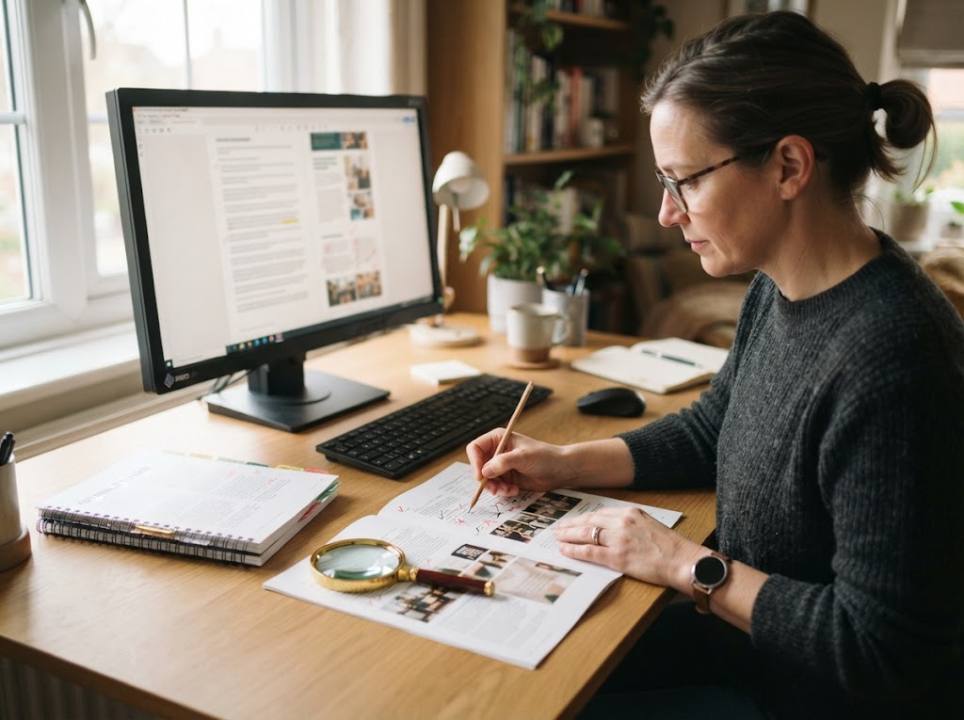
A translated brochure goes to print with the company's own name misspelled on the cover. A certificate translation lists the wedding date as 3 November instead of 11 March. A website launches with a button that reads, in the target language, something closer to "Abandon" than "Submit". None of these errors required bad translators. They required only that nobody checked the final text with fresh eyes.
Proofreading is the quiet step that protects translation quality. This article explains why it still matters, even with the best translators and modern tools.
Translators Are Too Close to Their Own Work
Every writer knows the problem. After working on a text for hours, the brain sees what it expects to see. Typos, missing words and repeated phrases slip past. A second linguist reading the translation against the source spots these issues quickly, because they come to the text without assumptions.
The two-person principle is not a sign of distrust. It is how quality is built into professional work.
What a Proofreader Checks
- Meaning: does every sentence say what the source says?
- Numbers and dates: amounts, measurements, formats.
- Names: people, companies, products and places.
- Terminology: consistent use of approved terms.
- Grammar and spelling: in the target language's conventions.
- Style: the right tone for the audience.
- Completeness: nothing omitted, nothing added.
Reliable professional translation services build this revision step into every project rather than offering it as an optional extra.
Machines Do Not Remove the Need
Spell checkers and quality assurance software catch some errors, such as double spaces, inconsistent numbers or untranslated segments. They cannot judge whether a sentence makes sense, whether a term fits the context or whether the tone is right. Machine translation adds its own risks: fluent sentences that quietly change meaning, dropped negations and invented words.
Human proofreading remains the only reliable way to catch these subtle problems.
Official Documents Leave No Room for Error
Personal documents such as certificates go to authorities who compare every detail with passports and other records. A marriage certificate translation, for example, must reproduce names, dates and places exactly. A single mistake can delay a visa or residence application by weeks. A second check before certification is simple insurance.
Scripts and Right-to-Left Languages
Languages written in other scripts carry extra risks during layout. Urdu, Arabic and Persian run right to left, and text can become scrambled when copied between programs. An experienced urdu translator reviewing the final PDF can spot broken ligatures, reversed numbers and misplaced punctuation that a non-reader would never notice.
Proofread in Context
Checking a Word file is not enough for brochures, websites, packaging or software. Text changes when it is placed into a layout: lines break differently, words get cut off, captions move away from images. The final proofread should happen on the finished format, by a native speaker.
Professional Standards
Professional bodies such as the Institute of Translation and Interpreting promote good practice, including revision by a second qualified linguist for work that will be published or relied upon. Asking whether your provider follows this practice is one of the simplest quality questions you can ask.
How to Organise Proofreading
- Agree that every translation for publication is revised by a second linguist.
- Provide reviewers with the source text and glossary.
- Proofread the final layout, not only the text file.
- Collect corrections in one place and feed them back to translators.
- Update glossaries and style guides with lessons learned.
Internal Reviewers
Colleagues in local offices can add valuable market knowledge, but they should not replace professional proofreading. Give them a clear role: flag anything that sounds wrong for the market or conflicts with company terminology, rather than rewriting text to personal taste. Their comments then go back to the translator for a final, consistent version.
Is It Worth the Cost?
Proofreading usually adds a modest percentage to the price of a translation and a day or so to delivery. Compared with reprinting a brochure, recalling packaging or resubmitting an application, it is very cheap. For short texts that will never be published, such as internal notes, it can sometimes be skipped. For anything customers, regulators or partners will read, it should not be.
The cheapest translation is the one you never have to fix.
Feedback Makes Translators Better
Proofreading is also a learning loop. When reviewers explain their corrections, translators learn the client's preferences, terminology and tone. Over time, fewer corrections are needed, quality becomes more consistent and projects move faster. Ask your provider how feedback from revision is shared with the translation team.
Final Thoughts
Human proofreading turns a good translation into a reliable one. A second pair of expert eyes, checking meaning, details and layout before publication, protects your reputation and your customers. In a world of fast tools and tight deadlines, it remains one of the best investments in quality you can make.